Making OKXIT: a storytelling card game from our youth exchange
In August, young people from six countries spent nine days together at the Blue Whale Education Center in Tauchen, on an Erasmus+ youth exchange about resilience and self-expression. They went home with new friendships and a suitcase of dirty laundry. They also left something behind: OKXIT, a storytelling deck of 46 cards they drew themselves, which anyone can now play on paper or on a phone.

The cover, hand-lettered by the group and ringed with symbols that later appeared in the deck.
It began on yellow paper
Nobody arrived in Tauchen planning to make a card game. The first session asked for something much smaller: take a sheet of yellow paper and draw a single idea on it. A feeling. A place you keep returning to. A warning you would give a friend. Anything you wanted to say but could not quite put into words in a shared second language.
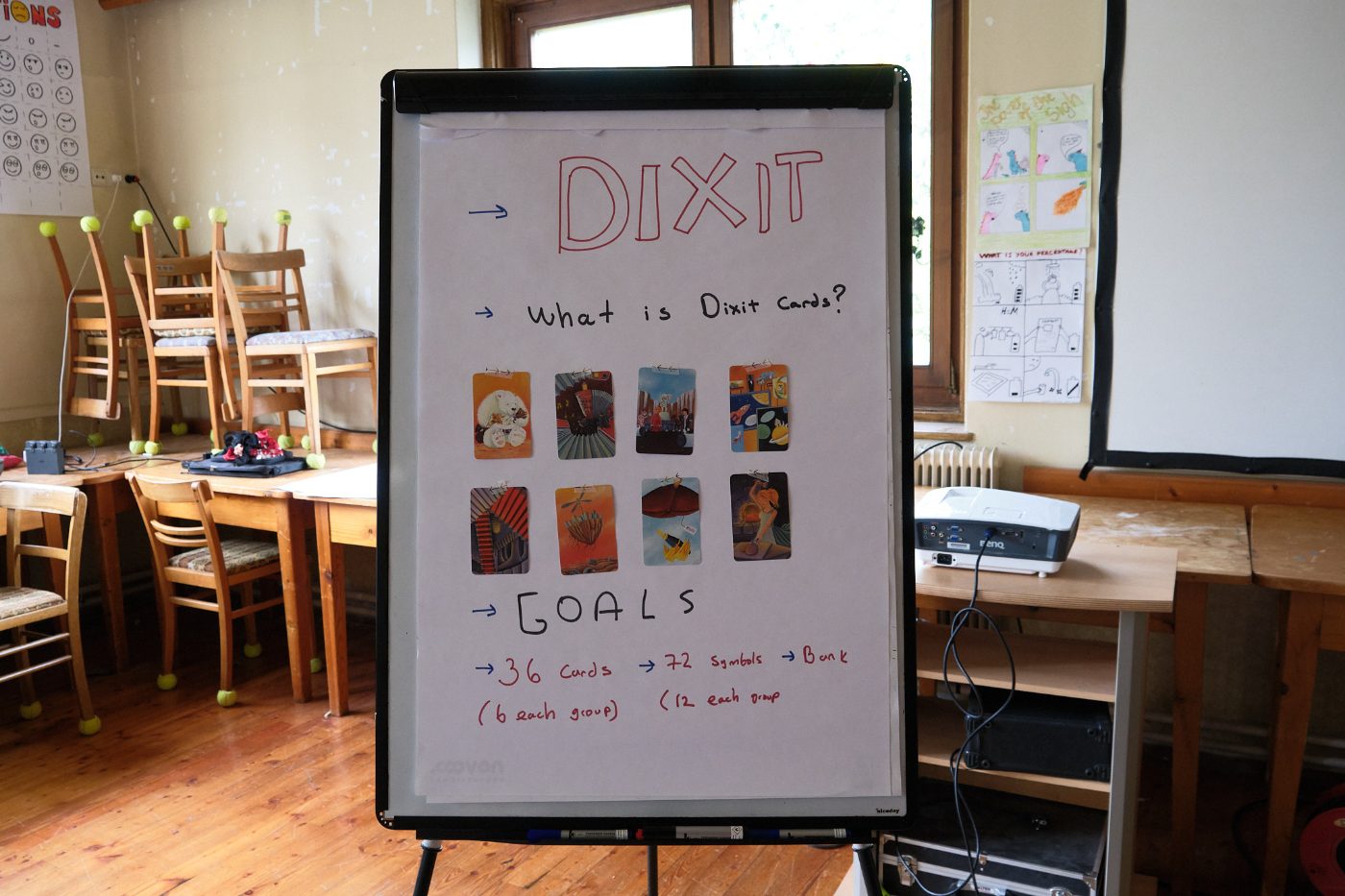
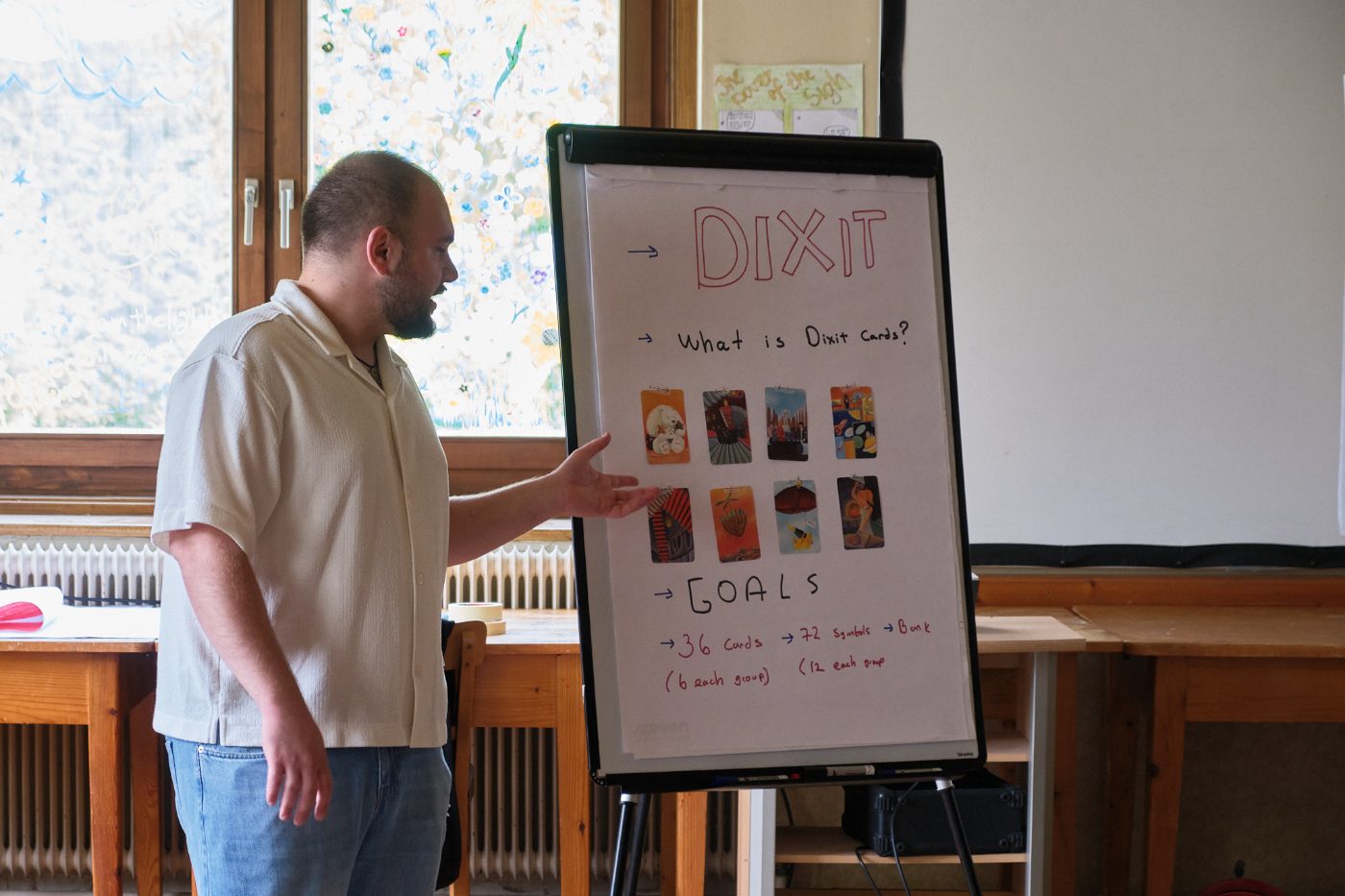
The brief on the first day: 36 cards and 72 symbols, made in six groups.
By the end of the week the group had filled 27 sheets. We scanned them exactly as they came off the table, without tidying anything up, and they now sit on the OKXIT page as the symbol bank. Thirty of those drawings came back later as building blocks for the finished cards: a snail, a birdcage, a storm cloud, and a giraffe that found its way into more scenes than anyone had planned.

The symbol bank
Each sheet carries several ideas from one person, drawn before anyone knew what they would be used for. Because the drawings came before the plan, the deck's visual vocabulary belongs to the group rather than to a brief written in advance.
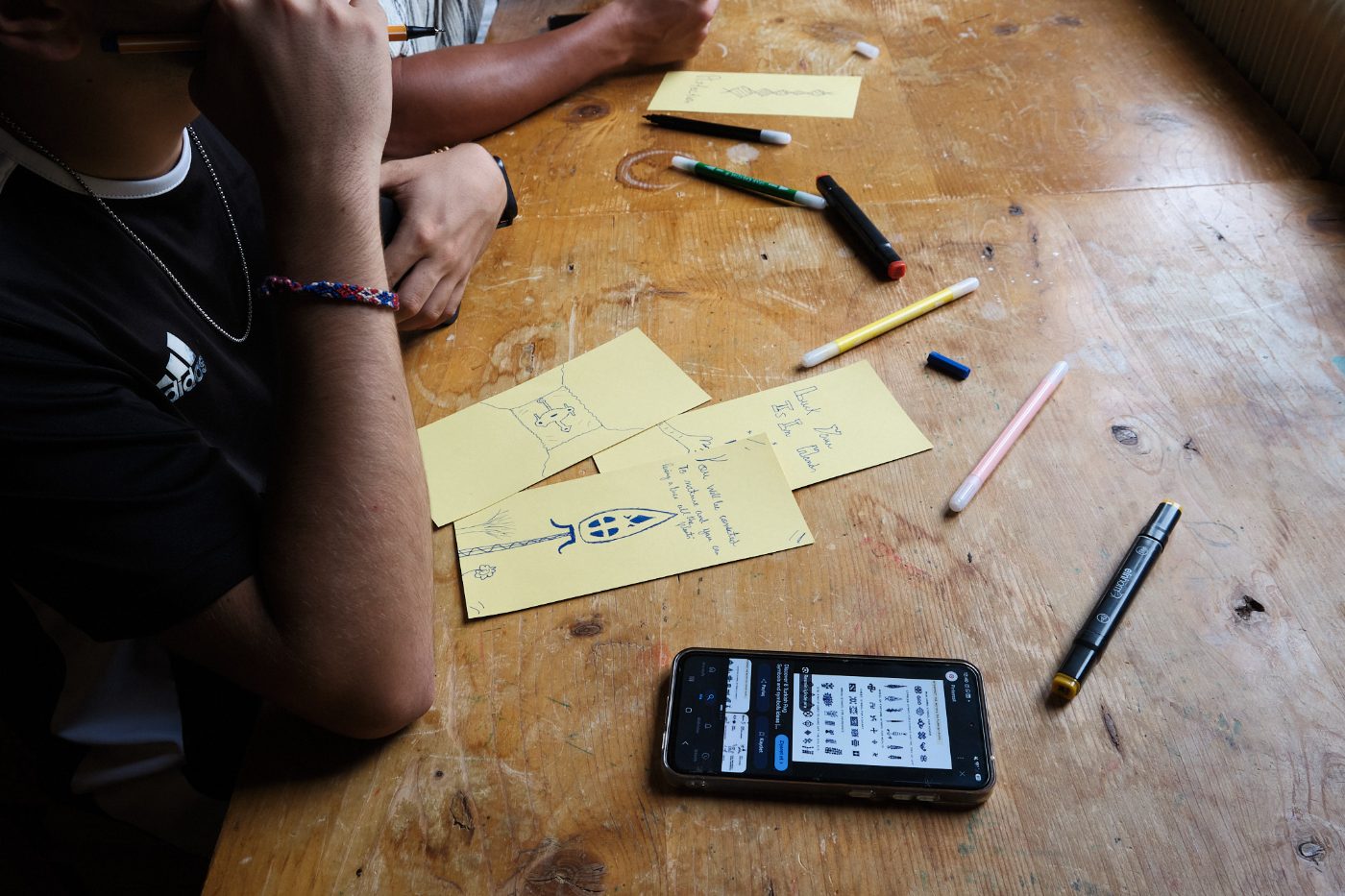
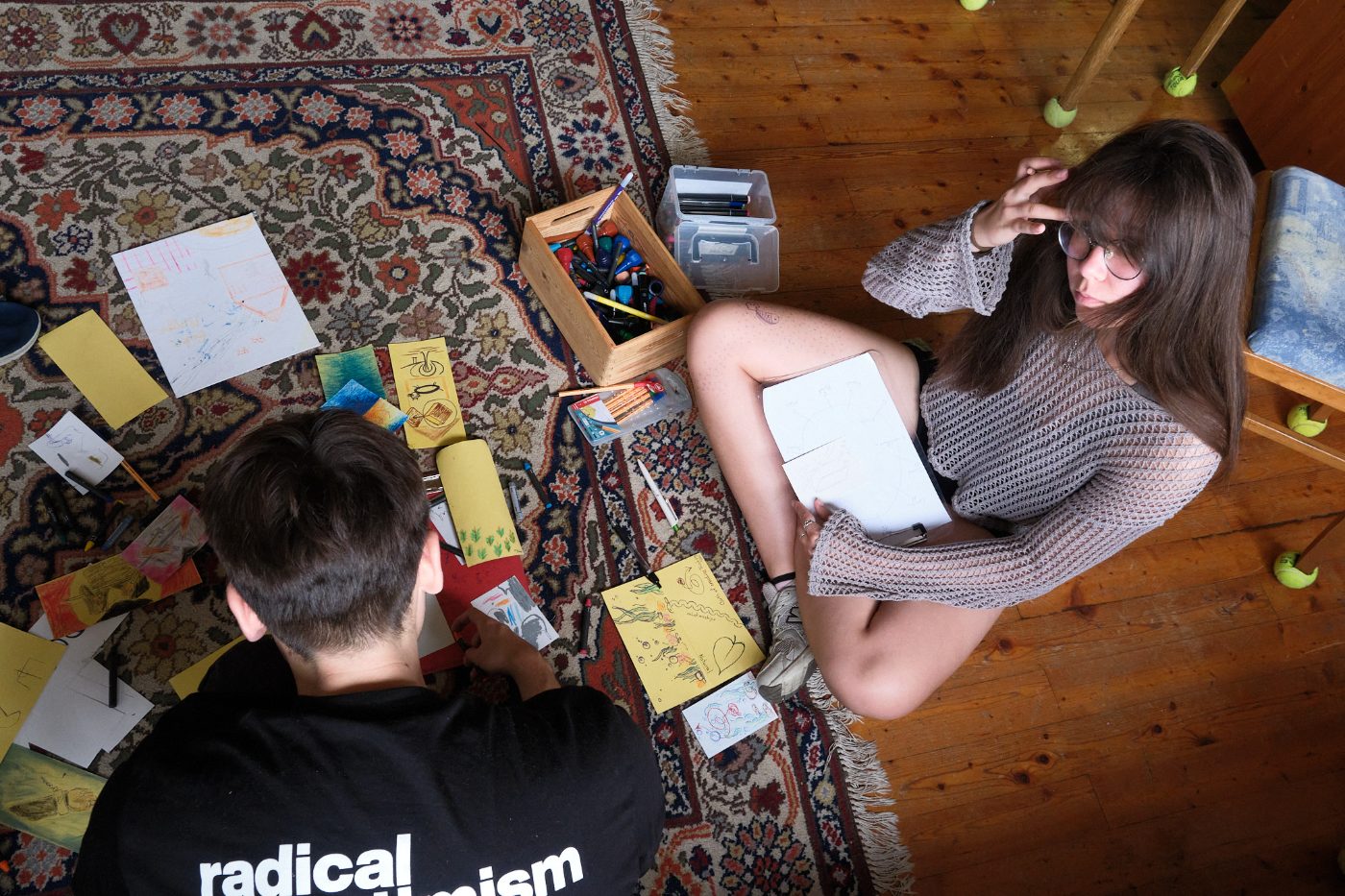
First sketches on yellow paper, and a workshop that spread onto the floor.
From single symbols to finished cards
Over the following days the group combined those symbols into full scenes, one card at a time. Clocks melt over a flat horizon. A hand at a crossroads holds a sign pointing four ways at once. Two figures reach towards each other across a gap. A UFO drifts above dark fields, and nothing below seems to notice.
We printed the results at 80 × 120 mm and left the fronts bare: no titles, no numbers, no captions. The website offers one possible reading for each card, but in the game that reading counts for nothing. Whoever tells the story decides what a card means for that round, and in the next round someone else may decide something entirely different.
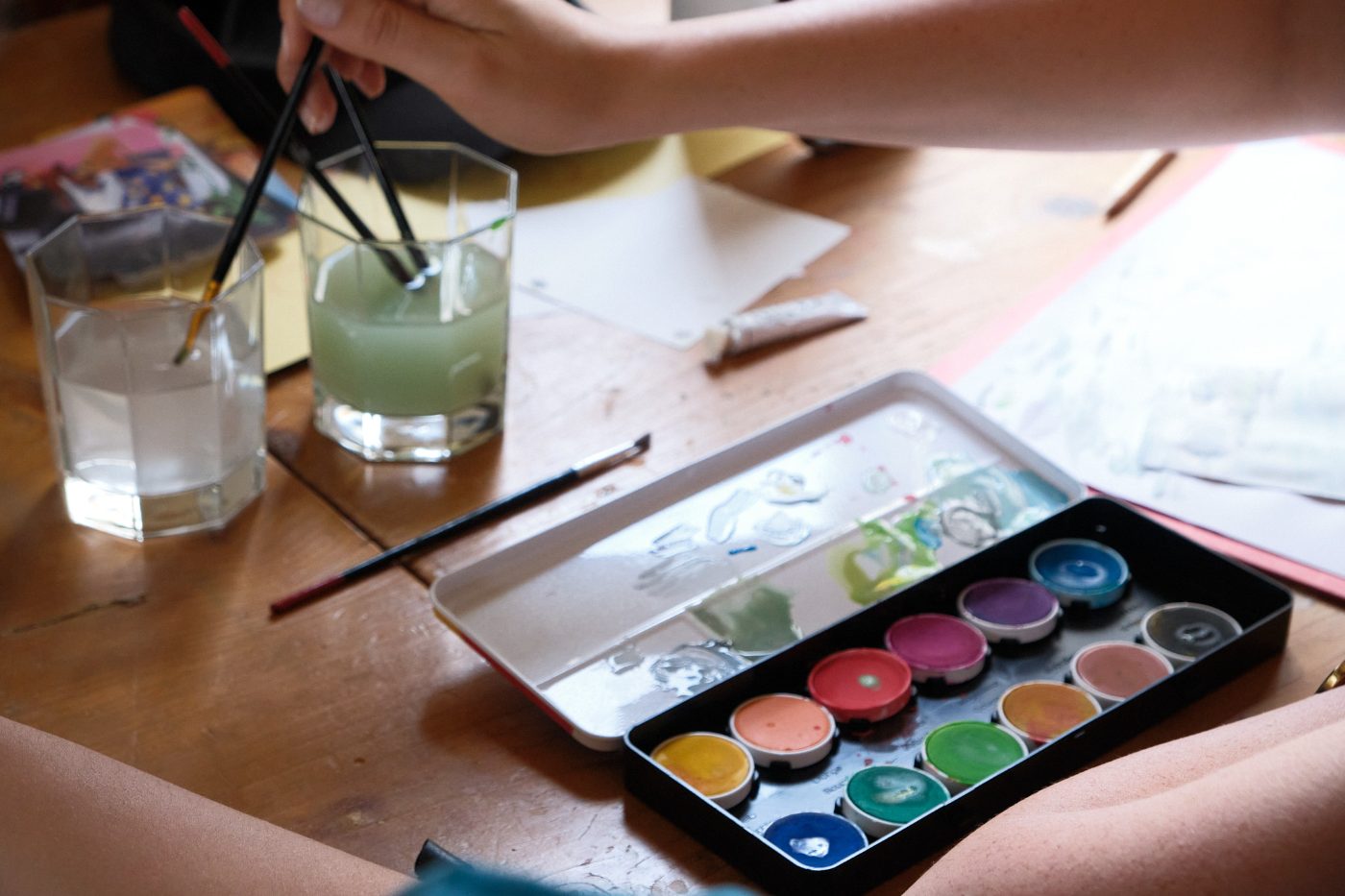
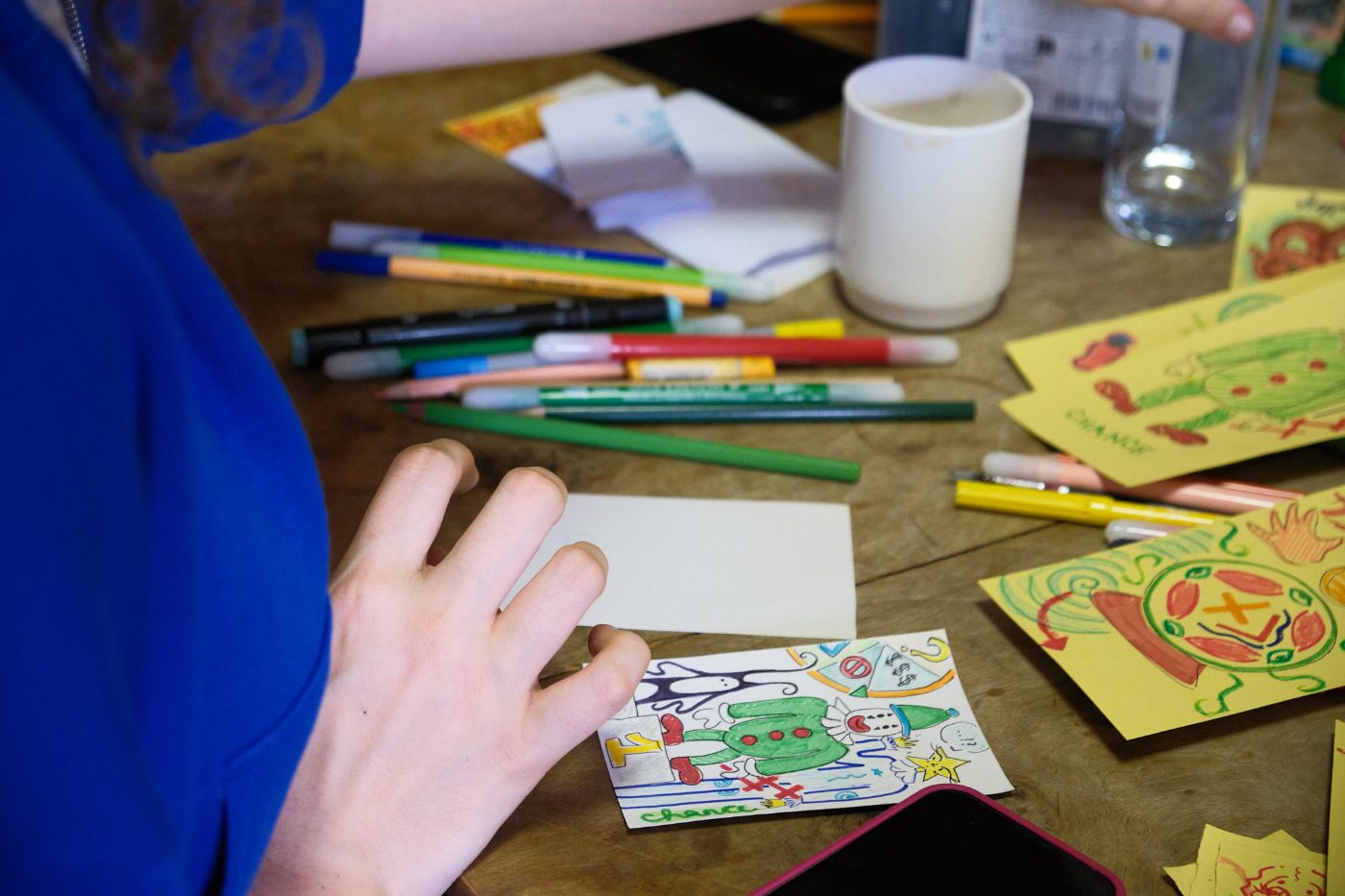
Watercolours, markers and a finished card.
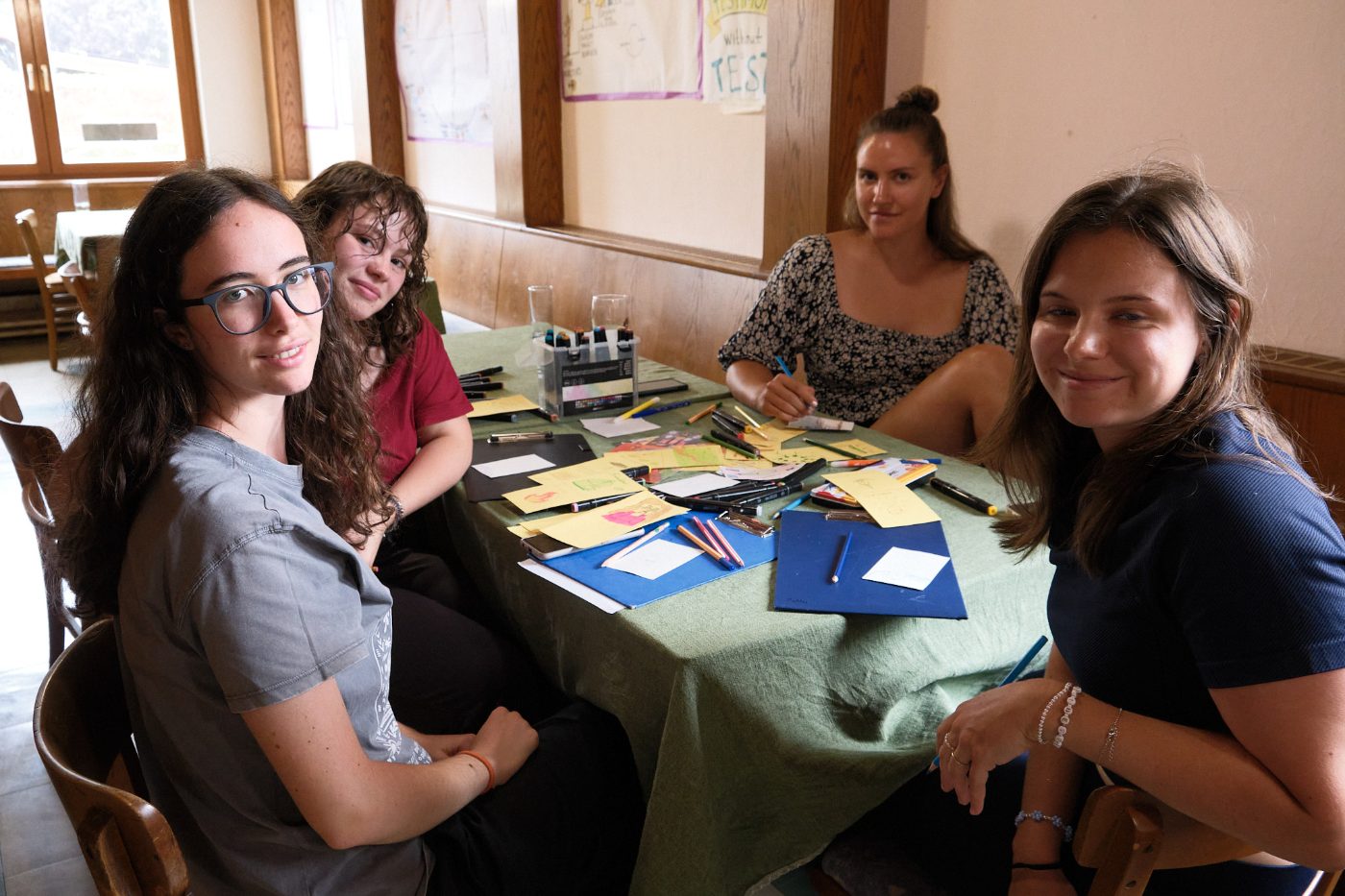
One of the six groups around its table.
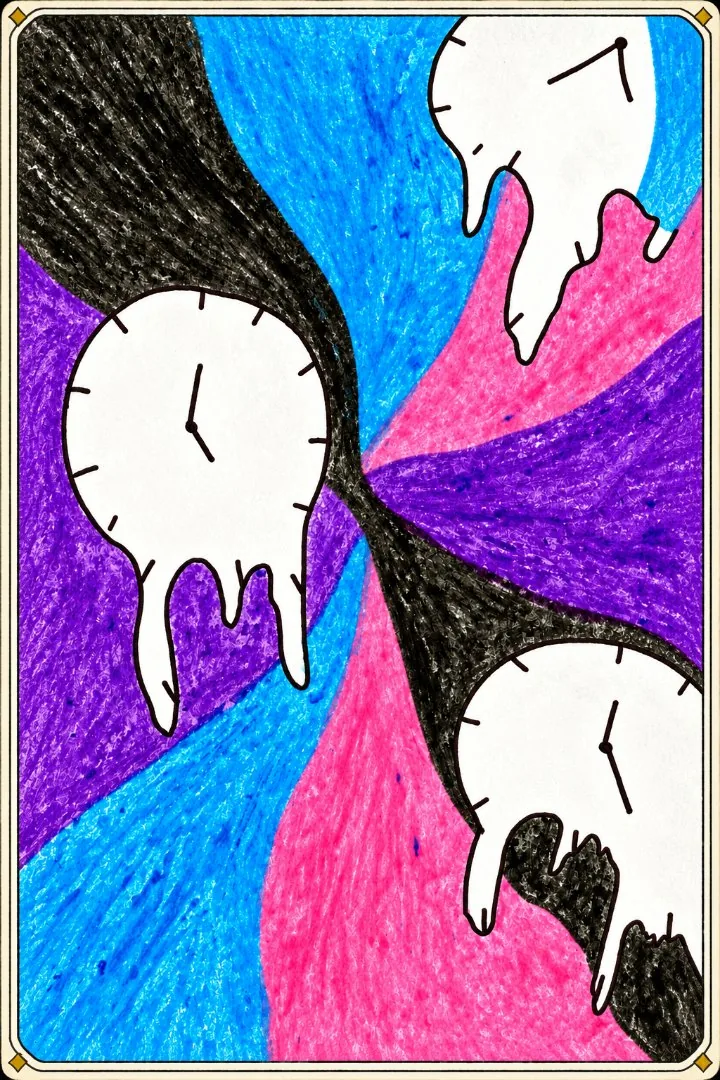
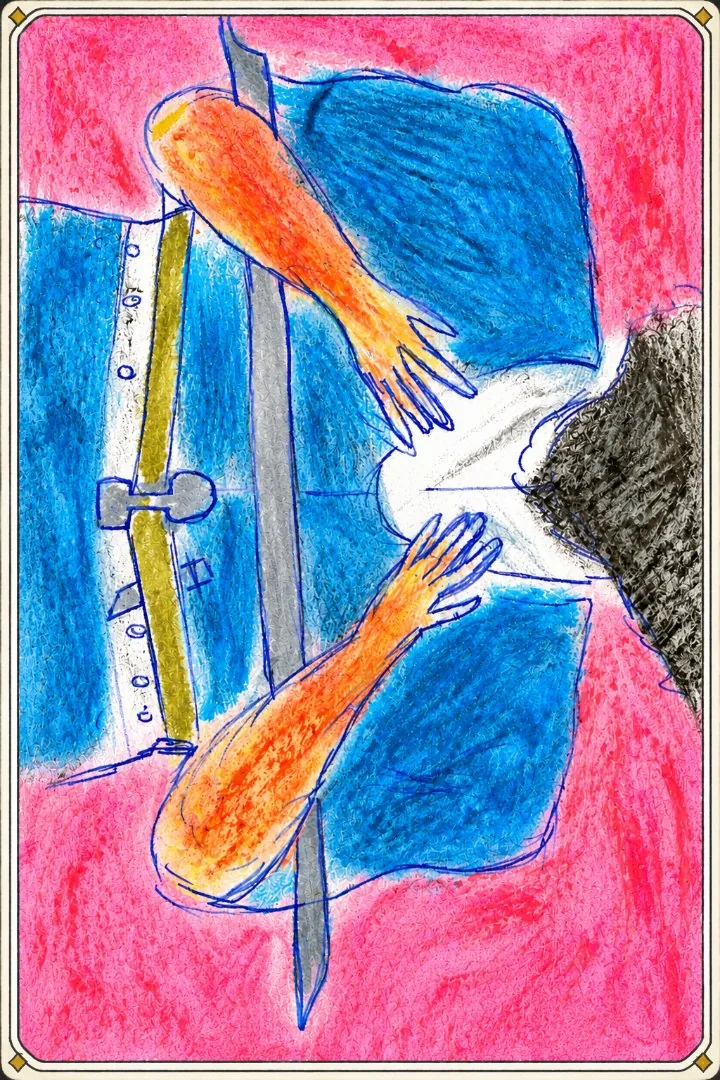
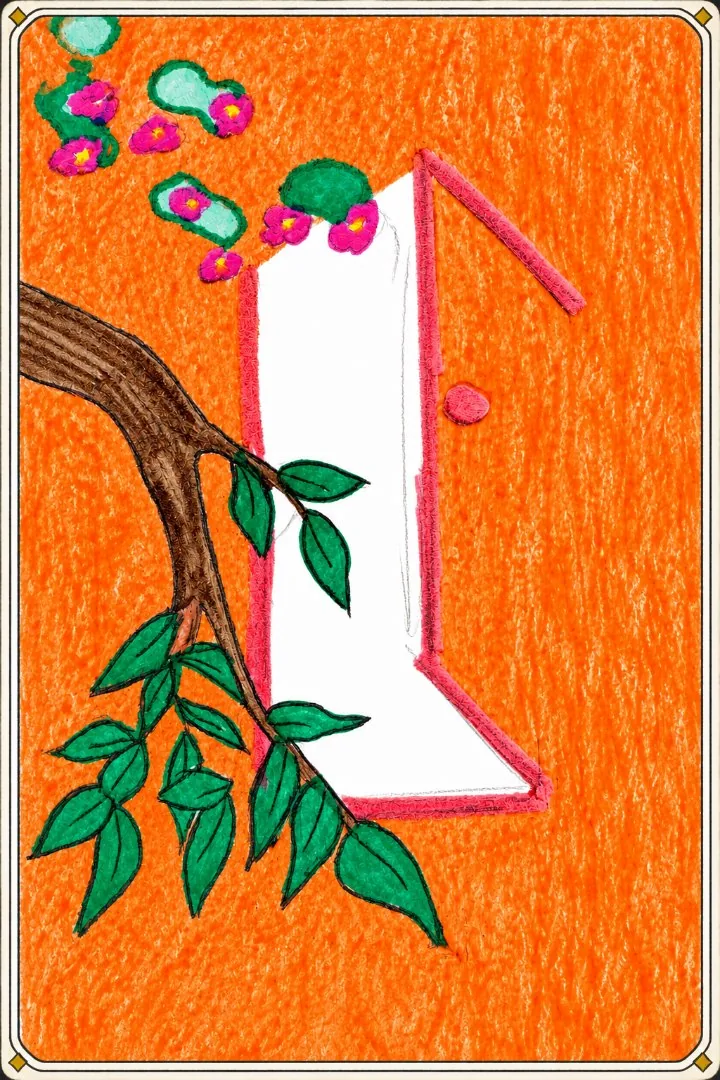
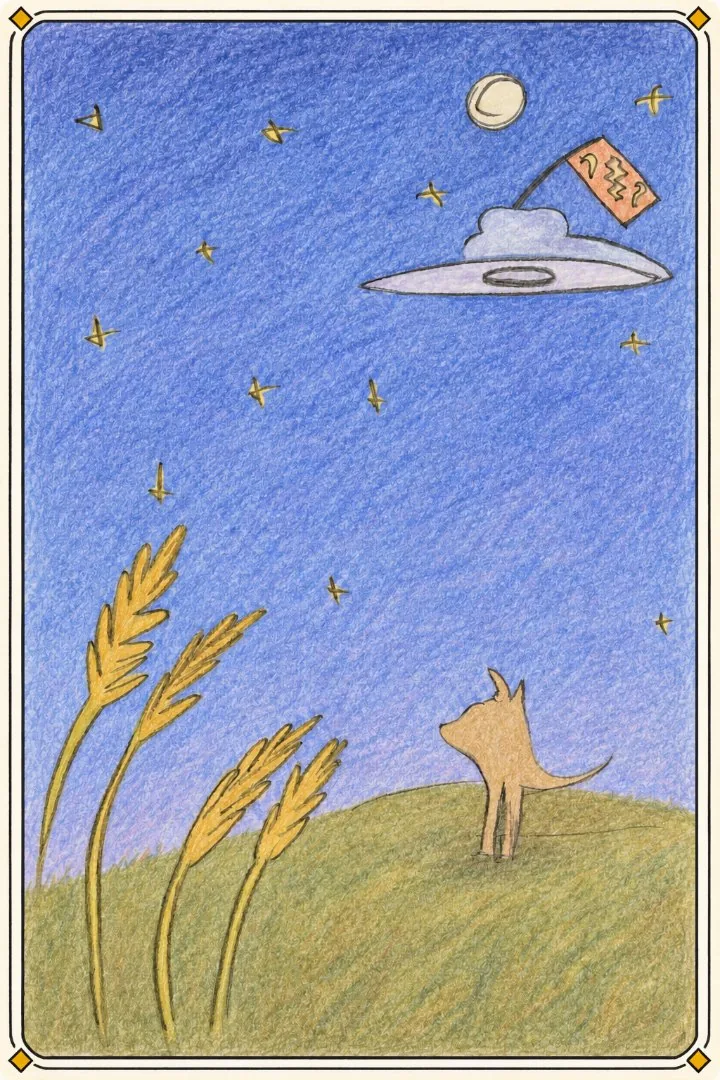
Four of the 46. Every card was drawn by someone in the group.
How a round is played
OKXIT works best with four or five players in the same room. Everyone opens the OKXIT page on their own phone and receives a hand of five cards that only they can see. One player takes the role of storyteller, and that role passes to the next person after every round, so everyone tells a story at least once.
Say the clue
The storyteller chooses one card from their hand and keeps it hidden. They then say a clue out loud: a single word, a short sentence, a sound, or a line from a song. The clue should not describe the picture. It should describe what the picture made them think of.
Add a decoy
Every other player now chooses a card from their own hand that could also match the clue. All the chosen cards, including the storyteller's, are shuffled together and laid out on the table with a number next to each one. Nobody knows which card belongs to whom.
Vote
Everyone except the storyteller votes for the card they believe the storyteller chose.
Score
Scoring depends on how many players found the storyteller's card. If only some of them found it, the storyteller scores 3 points, and so does every player who voted correctly. If everyone found it, or nobody did, the storyteller scores nothing and each of the other players scores 2 points. Separately from all of this, you score 1 point for every vote your own decoy attracted.
The scoring rewards a very particular kind of clue. Give away too much and everyone finds your card, so you score nothing. Give away too little and nobody finds it, and again you score nothing. What you want is a clue that some players can follow and others cannot, which usually means reaching for a shared reference, something the people at your table have been through together.
A round with no winner
Youth workers and teachers often use the deck a second way, with no points and no winner. Lay the cards out face up, ask one question, and give everyone a minute to choose the card that answers it for them. How do you feel today? What was this week like for you? What are you taking home with you?
Then go round the circle. Each person shows their card and explains why they chose it, and nobody interprets anyone else's choice. It works well at the end of a long workshop day, after a session that turned serious, or on a first evening when everyone is still learning each other's names.
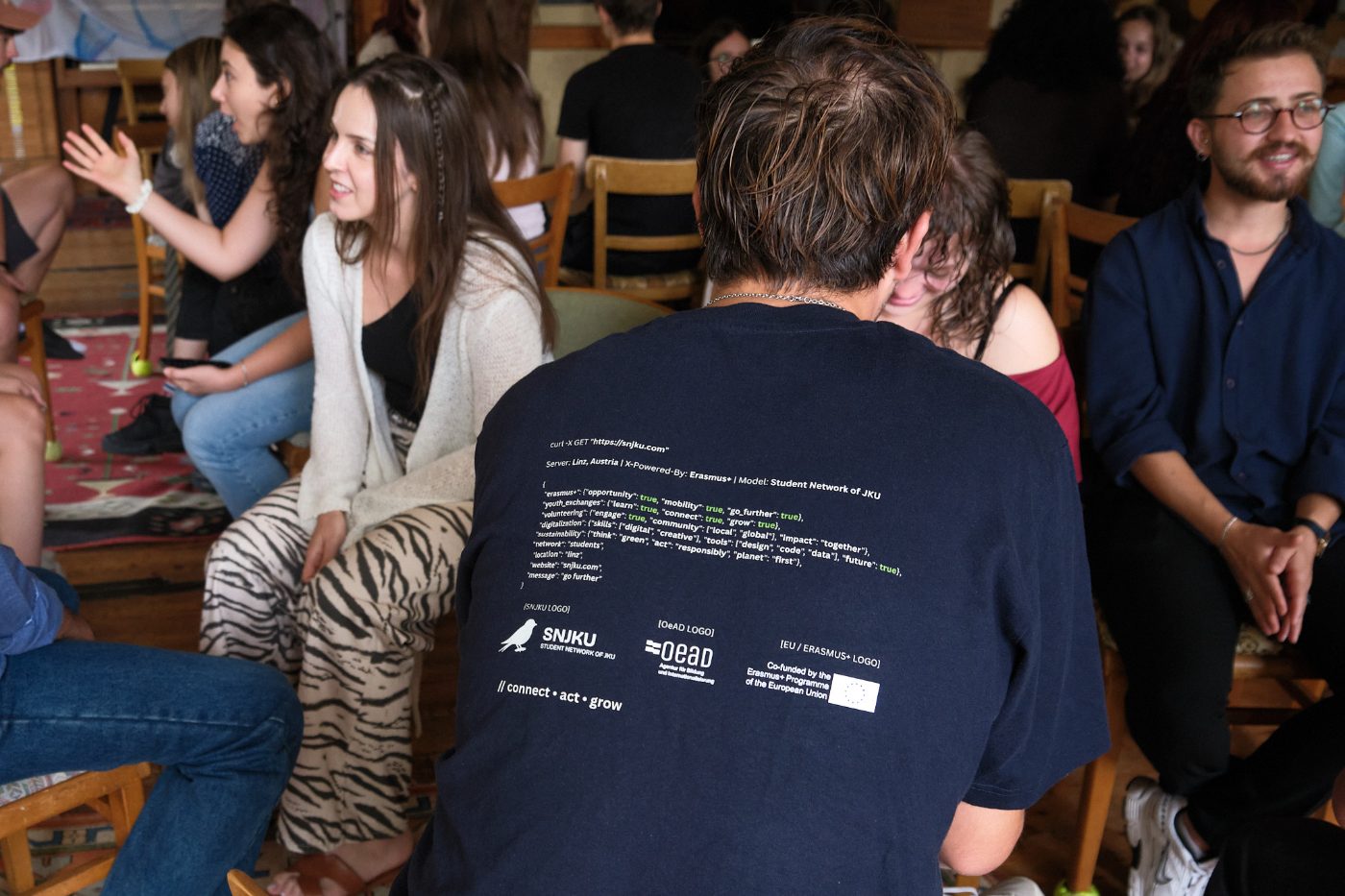
A reflection round in the seminar room.
Print your own set
All 46 cards are laid out on A4 sheets in a free PDF. Print them at home, cut along the lines, and you have a full deck without waiting for anything to arrive in the post. The phone version needs no account and nothing to install: one player starts a game, reads the game word out loud, and everyone else types it in.
Play OKXIT Download the print & play PDF ↓
Who drew it
OKXIT was drawn by the participants of It is OK!, an Erasmus+ youth exchange hosted by SNJKU at the Blue Whale Education Center in Tauchen from 17 to 25 August 2026. The project brought together young people from Austria, Poland, Italy, Spain, Türkiye and Czechia to work on emotional resilience, self-discovery and creative expression. The deck came out of that week, and it goes on being played in other rooms, by other groups.
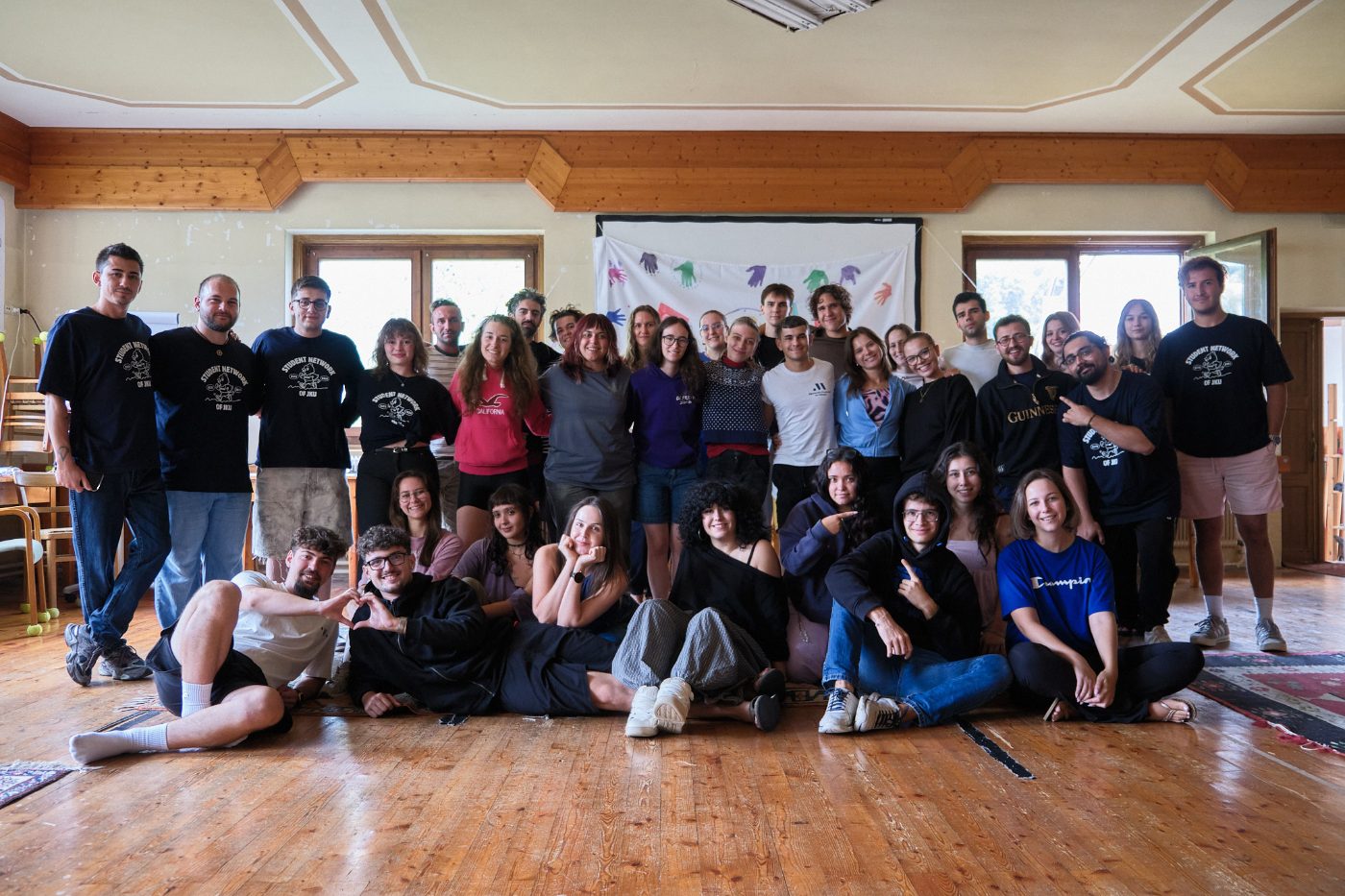
The It is OK! group in Tauchen, August 2026.
Want a deck?
The printed set is a deck of 46 cards, each one 80 × 120 mm. If your youth group, class or organisation would like to play with it, write to office@snjku.com and tell us roughly how many people you work with.
Planning a dissemination activity for It is OK!? A game of OKXIT or a reflection round both count. Remember to include the project name, the OKXIT link and the hashtags #ItsOK #OKXIT #SNJKU #ErasmusPlus in your public post.
Project 2025-3-AT01-KA152-YOU-000384735. Funded by the European Union. Views and opinions expressed are those of the authors only and do not necessarily reflect those of the European Union or the European Education and Culture Executive Agency. Neither the European Union nor the granting authority can be held responsible for them.